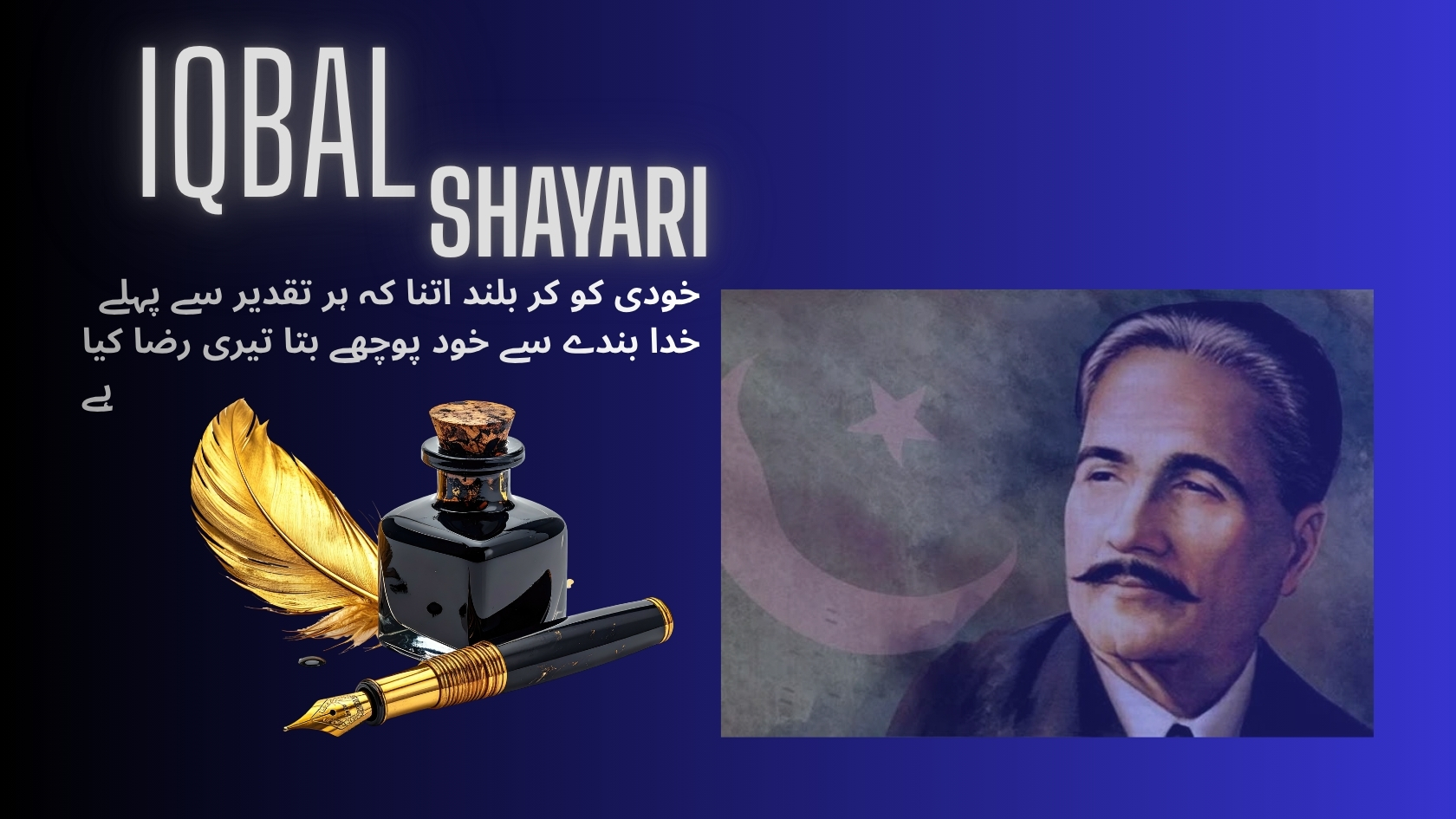
Allama Muhammad Iqbal is not just a poet — he is a philosopher, a thinker, and a voice that still echoes in the hearts of millions. His shayari does not merely please the ears; it shakes the soul, questions the mind, and ignites a fire of self-realization. On this page, we present some of the most powerful verses of Iqbal with a fresh perspective, written exclusively for this space.
Khudi — The Concept of Selfhood
Iqbal’s entire philosophy revolves around one word: Khudi. It means recognizing your own worth, your own power, and your own divine connection. He believed that a person who does not know himself can never know the world.
خودی کو کر بلند اتنا کہ ہر تقدیر سے پہلے
خدا bande سے خود پوچھے بتا تیری رضا کیا ہے
What it means: Raise your selfhood so high that before every destiny is written, God Himself asks the human being — “Tell me, what is your will?”
This single couplet carries the weight of an entire philosophy. Iqbal is not teaching arrogance here. He is teaching awareness. He wants every person to stand with such dignity and consciousness that the universe begins to consult them before deciding their path.
The Eagle and the Crow — A Lesson in Ambition
Iqbal often used the symbol of the Shaheen (falcon/eagle) to represent the awakened soul, and the Kawa (crow) to represent the ordinary, limited mindset. This comparison appears repeatedly in his work.
تو اڑ اڑ کے جس کو آشیاں کی تلاش ہے
وہ شاہین ہے، پھر اسے پنجرے کی کیا ضرورت
What it means: The one who flies and flies in search of new horizons — that is the eagle. What need does it have for a cage?
Iqbal is directly challenging those who settle for comfort zones. The cage here is not just physical — it is the cage of ordinary thinking, mediocre goals, and a life lived without purpose. The Shaheen does not ask for permission to fly. It simply flies.
Never Accept Defeat — The Iqbal Spirit
In a world where people give up easily, Iqbal’s poetry stands as a wall of resistance. He refused to believe that circumstances can permanently break a human being.
سانپ کی آنکھوں میں جادو نہیں ہوتا
یہ تو وہ عقیدہ ہے جو خود بخت کو بدلتا ہے
What it means: There is no magic in the eyes of a snake (referring to the myth). It is actually that belief — that conviction — which changes destiny itself.
This verse destroys the concept of luck and superstition. Iqbal is telling us that it is not external forces that shape our life — it is our internal belief system. When you truly believe in something, your actions change, your decisions change, and eventually, your destiny changes.
The Problem of Sleeping Nations
Iqbal was deeply concerned about the state of the Muslim Ummah in his time. He saw people who were once rulers of the world now living in a state of mental slavery and deep sleep.
اس ملک کے دلوں میں خواب سے نمودار ہو
کہ یہ ملک ہے میرے خوابوں کا سرکار ہے
What it means: May this nation emerge from the dream (slumber) of hearts, for this nation is the ruler of my dreams.
Notice the word khawab (dream) used twice but with completely different meanings. The first khawab means sleep — unconsciousness. The second khawab means vision — a conscious dream of a better future. Iqbal is asking people to wake up from their unconscious sleep and step into his conscious vision.
Youth — The Real Power
Iqbal placed his greatest hopes in the youth. He believed that old minds carry old habits, but young minds carry the possibility of entirely new worlds.
میری طلب سے میرے حقیرے خاکی صورت میں
تجھے مجھ سے شرم نہ آئے تو مجھے شرم آئے
What it means: Through my striving, from my humble clay form — if you (God) do not feel ashamed, then I feel ashamed.
This is a dialogue between Iqbal and his Creator. He is saying that he has tried his best to rise from dust to something meaningful. If even after that effort, the result is not worthy, then let the shame fall on him — because at least he tried. This is the attitude he wanted to install in every young person: try with your full power, and if you fail, at least fail with dignity.
Love, Devotion, and Spiritual Depth
Iqbal’s shayari is not only about revolution and self-power. He also wrote verses that touch the deepest corners of spiritual love and devotion.
مقصودِ زندگی تو آنکھ کا ایک نظر ہونا
ورنہ زندگی کے لیے یہ بھی کافی ہے کہ جینا
What it means: The real purpose of life is to have just one glance (of the Beloved). Otherwise, for mere living, just breathing is enough.
This verse separates existing from living. According to Iqbal, if you do not have a higher purpose, a deeper love, a spiritual connection — then you are only existing. Breathing is not living. There must be something that pulls your soul upward.
Why Iqbal Still Matters Today
People often ask: Why read Iqbal in 2025? The answer is simple.
Iqbal did not write for a specific time. He wrote for the human condition. As long as there are people who doubt themselves, as long as there are nations that sleep, as long as there are young people who waste their potential — Iqbal will remain relevant.
His shayari is not decoration for your WhatsApp status. It is a manual for living. Every couplet is a call to action, a push toward greatness, a reminder that you are far more powerful than you believe.
Final Words
Iqbal once said:
افکارِ خودی سے پھوٹا ہے ستر ستارے
یہی ہے مقصدِ زندگی کا پہلا سفر
What it means: From the thoughts of selfhood, seventy stars burst forth. This is the first journey of life’s purpose.
The first step to changing your world is changing your thinking about yourself. That is where every journey begins.
If Iqbal’s words have touched even one corner of your heart today, then this page has served its purpose.
More read about Iqbal poetry